There were two of you in the room
There were two of us in the room
Mallory Jones
Almost every kind of trauma has one subject.
A car crash, an illness, a fire, a fall. One person, one body, one set of consequences. Even an assault, which has two people in it, has them in entirely different roles: there is someone it was done to and someone who did it, and we have courts, language and several thousand years of moral philosophy for sorting out which is which.
Reproductive trauma is not like that, and it is the only common category I can think of that is not.
It has an entry requirement. There must be two of you. Not two in the courtroom sense — two participants, equally necessary, neither of them the perpetrator. A pregnancy cannot happen alone and therefore a pregnancy cannot go wrong alone.
And then, within about ten minutes of it going wrong, there is one.
I wrote here recently about going back to Annie Ernaux at fifty-two, and about whether a woman is permitted to write this sort of thing down at all. That essay was about the page. This one is about the room, and about who is standing in it when the worst happens, and who is still standing in it thirty-three years later.
Start with what happens if he goes.
She carries both halves. Her own, obviously — the event, the medicine, the body, the remembering. And his, in the form of a question that only he can answer and that he is not available to answer. What was it for him. What did he think had happened. Whether he thought about it at all.
That second item sounds abstract and is not. It is an open file. It does not fade, because nothing acts on it, and it cannot be closed from this end.
Now take the more interesting case, which is what happens if he stays.
She still carries more.
Men grieve. This is established, repeatedly, in a literature that almost nobody outside the field has read.
A systematic review of twenty-nine studies found that men routinely take on the role of supporter to their partner, and that doing so comes at the expense of their own health and wellbeing — including, for some, heavier drinking afterwards.
A later review, of forty-six studies, gave the thing its proper name. Double-disenfranchised grief. They are mourning a loss that is barely recognised, in a role that is not recognised at all, and the authors note that the bereavement guidance has itself been written almost entirely around mothers.
And a 2019 Australian study — a small one, ten men, interviewed after their partners miscarried — is titled with a sentence one of them said: there was just no-one there to acknowledge that it happened to me as well.
None of this is new. A paper from 1997 is called The legitimacy of grieving. One from 2004 is called A grief ignored. The titles have been doing the work for thirty years.
So they are not fine, and were never fine. But note what the research says they do about it. They hold it back, on purpose, so as not to burden her.
Which means she is now carrying her own grief plus his silence — and in thirty years' time somebody will explain to her, kindly, that he is just a private person.
He stays, and she carries one and a half. He goes, and she carries two. There is no arrangement in which she carries one.
None of this requires anybody to be cruel. It is laid down in advance, in the paperwork, before a single person has had a feeling.
The appointment is in her name. The notes, the scan, the wristband, the consent form, the follow-up letter, the sick note. In England a termination needs the signatures of two doctors and he is not one of them. If anybody asks about him at all, the question is whether there is someone at home with her — which makes him a resource rather than a person who was there.
At no point is there a form on which he is the patient.
He is a partner. That is a relationship, not a role.
So every institution he passes through spends several months establishing that this is happening near him rather than to him. And then everyone else agrees with the institutions, for the rest of his life. Including him.
It is shifting, slowly. When The Lancet published its miscarriage series in 2021 it called for investigation after one loss rather than three, an end to the postcode lottery in care, and long-term mental health support. Tommy's, working from it, recommended that women and partners be referred for mental health assessment.
Partners. As a recommendation. In 2021. Which tells you exactly where we were starting from.
And then there is the thing that took me three decades to notice, because it is made entirely of an absence.
Nobody ever asks him.
I do not mean nobody asks whether he is all right; we have just established that nobody does that either. I mean something much narrower and much stranger.
As far as I am aware, in thirty-three years, not one person has ever said to the boy who was standing in that corridor: did you go back? Did you check that she was all right?
Consider what we do with anything else. If a man were driving and his passenger was badly hurt, every person he met for the next twenty years would ask whether he had been to see her. If he had been there when a friend collapsed. If he had got out of a building with somebody still inside. The question would be the first thing out of everybody's mouth, and it would never stop being asked, and no amount of time would make it an odd thing to raise.
He is not forgiven, because forgiveness requires a charge. He is not charged. He steps out of the category and it closes behind him as though it had only ever had one person in it.
Now I want to show you how far into a person this goes, because I found out by accident and it is the worst thing I know about myself.
I have spent two years writing a book about what happened. The book is not about him. It never was. That is the irritating part — people assume a book like this is a long complaint about a man, and it is not. It is about a girl of seventeen, and what the loss did to her, and the thirty years she spent being impeccable afterwards.
So when I went back through the manuscript, properly, with a system, I expected to find myself being hard on him.
Here is what I actually found.
I had protected him on every page. Mitigation after mitigation. He was only nineteen. His family did not talk about things. He had no language for it. He may not have understood what had happened. I cannot know his mind — a line I had written, in various forms, more times than I could count, always just before anything got difficult.
And her?
I had given her nothing.
No privacy. I put her in the worst rooms of her life in full detail and never once stopped to ask whether she would have wanted that. No defence. No context. No allowances for her age, which was two years younger than his. I never worried about how she would come across. I never wondered what people would say about her — because I already knew precisely what they would say, and by whom, and I had decided it was the price.
I did not protect her at all. I protected him the entire way through.
And I want to be clear that this was not fairness, although it looked like fairness and I would have defended it as fairness. Fairness is applied evenly. This was not even. I had one instinct running at full power, which was to make sure nobody thought too badly of him, and no corresponding instinct of any kind for the seventeen-year-old, because that instinct had never been installed.
I did not stop on my own. Other people had to tell me. Readers, going through it, who said: you are being so careful with him that we cannot see what actually happened.
That is what the arrangement does, in the end. It is not only that he is excused and she is not. It is that she will do the excusing. Thirty-three years on, with a profession and a vocabulary and no illusions left, sitting at her own desk writing her own account of her own life, she will still be working as his defence counsel, unpaid, and will not notice until somebody points at the page.
So here is the end of this, and it is addressed to a particular group of people, and I think a few of you are reading.
I am not writing to one man. I have no idea how many of you there are, and the research suggests a great many.
You are in your fifties or sixties now. A long way behind you there is a girl, and a pregnancy that went wrong or was ended, and you were there for some of it. You left, or you stayed and said nothing. It has sat in you ever since as an awkward shape you have never had a name for and have certainly never discussed with anybody.
You have told yourself one of three things. That it was a long time ago. That she will have moved on. That raising it now would only upset her.
All three are wrong, and I can tell you so with some authority, because I have been one of those girls, and because I have spent two years in the company of the evidence about the rest of them.
It was a long time ago for you. For her it is intact, exactly the size it was, because nothing happens to these things in storage.
She has not moved on in the sense you mean. She has built an entire working life on top of it, which is a different thing and considerably more tiring.
And it would not harm her. It might upset her, and those are not the same. The thing that has been doing the damage for thirty years is not the question. It is the absence of the question.
You do not have to apologise. I suspect the dread of having to perform some enormous apology is what stops most of you, and the apology was never the point.
You do not have to explain yourself. You probably cannot, and nobody is asking you to.
But do not reach for the one about being too young to know what to do with it. I have just spent several pages catching myself handing you that, and I am not going to do it again on the last page.
She was seventeen. She sat in a college library at lunchtime with forty minutes and a textbook and worked out, on her own, the things no adult in her life would tell her, because there was nobody to ask. If a girl of seventeen could think her way through it with nothing, a boy of nineteen could have thought to pick up a telephone.
You may well have been a coward. Most people are, at nineteen, about the largest thing that has ever happened to them. That is forgivable, and it is also not the point, because cowardice at nineteen does not come with a thirty-year sentence attached.
You can simply say it. I was a coward, I could not face you, and I have thought about it ever since. That is a complete sentence and it costs nothing.
And then have the conversation.
Because you are not nineteen anymore.
You are not twenty, and you are not twenty-five. You are a grown man with a career and a family and thirty-odd years of practice at being a person. You have words. You have feelings and you can name them — you do it about other things all the time, about work and music and your own father. You have a telephone in your pocket and her name is probably in it.
You have capacity.
Which means that from here it is not a limitation. It is a choice, made by an adult, repeatedly, every day that you do not make it.
Ask the question, or stay a coward and leave her in that room on her own for the rest of her life.
This is the whole of it.
Were you all right?
Four words. You will have to mean them, and you will have to stay on the line for the answer, because she may have been waiting a very long time and it may take her a while to get it out.
And here is how low the bar is.
In January 1992, in Leeds, before the worst of it had even happened, a taxi driver asked a girl of seventeen whether she was all right. At a red light, on the Otley Road, at about half past ten at night. He did not know her name. It cost him four seconds.
She is fifty-two now. She has remembered that man for thirty-three years.
That is what is sitting there, available to you, for the price of one phone call, from somebody who does know her name.
And she is still in that room. Still waiting.
Not because she is bitter. Not because she is resentful, or obsessed, or unable to let it go, or whichever of those words arrived in your head first — and one of them did, and you did not have to look it up.
She may be angry. She may be upset. Thirty years is a long time to hold something that nobody has ever come for.
But mostly, and this is the part that matters, she is simply wondering why you never asked.
That is all it is. That is the whole of what is waiting for you in there.
There were two of you in that room.
She is still in it, on her own, and she has been for a very long time.
Go and ask.
Sources
Due C, Chiarolli S, Riggs DW. The impact of pregnancy loss on men's health and wellbeing: a systematic review. BMC Pregnancy and Childbirth 2017;17:380. doi:10.1186/s12884-017-1560-9
Obst KL, Due C, Oxlad M, Middleton P. Men's grief following pregnancy loss and neonatal loss: a systematic review and emerging theoretical model. BMC Pregnancy and Childbirth 2020;20:11. doi:10.1186/s12884-019-2677-9
Miller EJ, Temple-Smith MJ, Bilardi JE. 'There was just no-one there to acknowledge that it happened to me as well': a qualitative study of male partner's experience of miscarriage. PLOS ONE 2019;14(5):e0217395. doi:10.1371/journal.pone.0217395
Puddifoot JE, Johnson MP. The legitimacy of grieving: the partner's experience at miscarriage. Social Science & Medicine 1997.
McCreight BS. A grief ignored: narratives of pregnancy loss from a male perspective. Sociology of Health & Illness 2004.
Coomarasamy A, et al. Recurrent miscarriage: evidence to accelerate action. The Lancet 2021;397(10285), published 26 April 2021. doi:10.1016/S0140-6736(21)00681-4
Tommy's. Lancet miscarriage research: our recommendations to the government.
I read Annie Ernaux in the nineties, when we thought it was all sorted
I read Annie Ernaux in the nineties, when we thought it was all sorted: Here is what happened first.
Thirty-three years after a boy stood on a cycle path and told me he did not love me, he came back. Unasked, from the other side of the world, into a life he knew nothing whatsoever about. And he rewrote the whole of it in a single sentence.
Where I was standing when it arrived matters, because it is the part that gets lost every single time.
I was not looking.
I had told him so, in writing, days beforehand, in those words: this is not a romantic fishing expedition. I had told him I believed what he said to me in 1992. I had made my peace with it decades earlier and I had said so to him, more than once.
That peace was not what it sounds like. People hear it as recovery. It was nothing of the kind.
I had not got over it. I had survived it.
At eighteen there was a choice, and I remember making it. Let it in and break, or pack it away and carry on. I packed it away and carried on, and I did it beautifully, for three decades, and anybody who knew me would have told you I was fine.
Nothing in there got smaller. It waited, in the exact shape and size it went in.
And the whole arrangement rested on one thing being true: that he had not loved me. He had told me so to my face, in daylight, and I had believed him, and believing him was the only thing that let me stand up. It was not a wound I was nursing. It was the foundation.
It was also a lie, and he was the only one who knew.
He knew the rest of it too. I had explained the whole arrangement to him, in full, that same week.
And then he did it anyway.
He sent the one thing I had not asked for, could not use, and had built my entire life around not needing. He interrupted me. That is the plainest available word for it.
Then he asked for the conversation, and he chose the room it would happen in.
And when I answered — not with love, which may well be what he was braced for, but with what had actually happened to me — he went quiet.
Mallory Jones
I read Annie Ernaux for the first time in my twenties. I was in London by then, a long way from Leeds, and I had decided that the past was a place I had been and left.
We thought it was sorted. That is the thing I keep coming back to. We had the pill and the Act and a woman had been prime minister, which we had been encouraged to count as progress. The general feeling among women my age was that the heavy lifting had been done by somebody else, some time ago, and that we had arrived in time for the easy part.
So I read her the way you read history. Terrible thing. Happened to a woman in France. Over now.
If you have not read her: Annie Ernaux is French, born in 1940, and in 2022 she was given the Nobel Prize in Literature for half a century of writing about her own life. Her parents. Her class. Her body. Her abortion, which was illegal when she had it. Happening is about a hundred pages long. It will take you an evening, and you will not sleep much afterwards.
* * *
I went back to it this year, and not for craft, and not for research.
Here is what happened first.
Thirty-three years after a boy stood on a cycle path and told me he did not love me, he came back. Unasked, from the other side of the world, into a life he knew nothing whatsoever about. And he rewrote the whole of it in a single sentence.
Where I was standing when it arrived matters, because it is the part that gets lost every single time.
I was not looking.
I had told him so, in writing, days beforehand, in those words: this is not a romantic fishing expedition. I had told him I believed what he said to me in 1992. I had made my peace with it decades earlier and I had said so to him, more than once.
That peace was not what it sounds like. People hear it as recovery. It was nothing of the kind.
I had not got over it. I had survived it.
At eighteen there was a choice, and I remember making it. Let it in and break, or pack it away and carry on. I packed it away and carried on, and I did it beautifully, for three decades, and anybody who knew me would have told you I was fine.
Nothing in there got smaller. It waited, in the exact shape and size it went in.
And the whole arrangement rested on one thing being true: that he had not loved me. He had told me so to my face, in daylight, and I had believed him, and believing him was the only thing that let me stand up. It was not a wound I was nursing. It was the foundation.
It was also a lie, and he was the only one who knew.
He knew the rest of it too. I had explained the whole arrangement to him, in full, that same week.
And then he did it anyway.
He sent the one thing I had not asked for, could not use, and had built my entire life around not needing. He interrupted me. That is the plainest available word for it.
Then he asked for the conversation, and he chose the room it would happen in.
And when I answered — not with love, which may well be what he was braced for, but with what had actually happened to me — he went quiet.
Then he came back, and for eighteen months he wrote to me about everything else. His sleep. His work. His running. Records, gardening, the dogs, a politician he could not stand. Thousands and thousands of words, warm and funny and generous and precise, arriving at four in the morning his time.
He called it a friendship.
Every one of them screaming silence.
In August I sent him an email telling him something I had never told anybody in thirty-three years. It concerned him directly. He was the only other person it concerned at all. I wrote it plainly, with no accusation in it and no demand for any particular response.
Four days later he replied, on a different platform, about his inbox.
I will not pretend I handled that well. It put me into a tailspin that lasted weeks, and the tailspin was not really about him. It was about the book. I had a book by then, and all of it suddenly looked like a woman going on about herself.
Am I allowed to write this.
Is anybody actually interested.
Am I just a woman who could not get over a boy.
Eighteen months of it, and there I sat, checking whether I was allowed to mind.
Those are three questions and they are all the same question, and every woman who has ever written about her own life has sat where I was sitting and asked it. I went back to Ernaux to find out whether I was asking too much.
* * *
What I had missed at twenty-three was the force of it.
I had read it as a document. It is not a document. It is a woman holding something absolutely still, decades after the fact, and describing it at a level of exactness that most people cannot manage about last Tuesday. She has the rooms. She has what was said and what was not said. She has the sequence.
I know that kind of recall. I have it. It is not a gift and it is not nostalgia. It is what the mind does with an event it was given no help to process at the time: it keeps the whole thing, uncatalogued, in case somebody ever asks.
Nobody ever asks.
* * *
And then I found the thing I had not expected, and it stopped me.
She wanted her body to stop doing what it was doing, and it would not.
I wanted my body to carry on doing what it was doing, and it could not.
Same helplessness. Same aloneness. Opposite direction. Two women in two different decades in two different countries, each one locked inside a body that was going the wrong way, each one left to deal with the consequences on her own.
I had expected to find a predecessor. What I found was a harmony. Not the same note — the interval.
And around both of us, the same machinery. An institution with a clear procedure for the paperwork and none at all for the person. People who were not cruel, doing ordinary jobs on ordinary days, who between them produced a girl holding something nobody had given her a word for.
* * *
Then there is the boy, and I had him wrong.
I had assumed he was absent the way 1963 made men absent — no language for it, no expectation that he would have any, no room to be in. Architectural. You can be furious about that. You cannot really be surprised by it.
He is not absent. He is right there. He is there while she is pregnant. They go on a holiday that was arranged before, with another couple, and he goes, and she goes, and the thing sits in the car with them the entire way. He will not talk about it. And afterwards — after the part that nearly killed her — he does not arrive either.
He had a mouth and a train fare and sixty years of nothing stopping him.
So the two men are not separated by six decades of social progress. They are the same man with different hardware. One had no vocabulary and used it. Mine had thirty-four years, a profession made entirely of language, and an interior life he could describe at length and in detail whenever he chose to.
And mine went first. Nobody asked him for anything.
Sixty years apart, every tool in the world handed to the second one, and the result is identical. That is not a capacity problem. That has never been a capacity problem.
* * *
Now turn it round.
Imagine I had sent the three words.
A woman of fifty-two reaches twelve thousand miles into the life of a married man she has not seen since 1992, and writes to him.
She tells him she loved him.
She tells him it was the very best of physical and emotional attraction.
She tells him that what they had is the only love she has ever been sure of.
She tells him she does not know how she feels about anybody now, and cannot remember a time when she did.
Then she goes quiet for weeks.
Then she comes back and tells him about her sleep.
Then she asks whether he has read a novel.
Tell me what that woman is called. And be honest about how quickly you got there.
She is not complicated. She is not described as someone who disappears for a while and means nothing by it. She is obsessive. She is unstable. She is a woman who cannot let go. Somebody says bunny boiler, somebody else says poor wife, and the whole thing is settled before anybody asks what she actually wanted.
Same act. Same words. Same silences, in the same order. The only variable is which of us did it.
You already have the words for a woman who keeps asking. You did not have to look them up. You could give me six of them before you finished this sentence, and so could I, and neither of us would need a dictionary.
Now give me the word for a man who will not answer.
Take your time.
That gap is not an oversight. It is the permission.
So the rates are set before anybody opens their mouth. Ask once and you are owed an answer. Ask twice and you are difficult. Write a book about it and you are whichever of those six you reached for first. The quickest way to avoid all three is the route women have been taking for several thousand years, which is to say nothing and be called dignified.
Dignity is a wonderful thing. It is also the cheapest possible settlement, and it is always offered to the person who was not paid.
* * *
And while we are here, a word about the shelf I am supposed to be writing on.
The genre is called autofiction. The term was coined in 1977 by a French novelist called Serge Doubrovsky, on the back of his own book, to describe a thing he had decided to do: write his own life as a novel, with his own name on the narrator. He has been called bold for it, and candid, and brave, and he is generally credited with inventing the form.
Sylvia Plath published The Bell Jar in 1963. Fourteen years earlier. Her own breakdown, her own hospital, her own name swapped for one letter.
Annie Ernaux published her first book in 1974. Three years earlier. It was a fictionalised account of her own illegal abortion.
So two women had already done the thing, one of them twice, before anybody thought to name it. Then a man named it, and the name is his, and the genre is his, and the bravery is his.
Plath was confessional. Ernaux was personal, and French, and writing about her body again. He was an innovator.
Go and look at the photographs of the three of them. Then decide which of those faces the twentieth century was ever going to call the inventor of anything.
They were just women, writing about what had happened to them.
Now they are on his shelf.
* * *
So. The question I actually went looking for an answer to.
The charge against this kind of writing never changes, and it is never about the writing. Too personal. Too small. A woman going on about her own body. Ernaux has had it in French for fifty years. The Nobel did not stop it.
The defence has never been scale. It is precision.
A thing described exactly enough stops being one woman's complaint and becomes a record. That is what she does. It is what I am trying to do. It is why my book is written in the register I use at work, and that register is the only reason I can look at the subject at all.
So, no. I was not asking too much.
I have written a book about a girl of seventeen who lost a pregnancy that nearly killed her, in a hospital that never once said the word baby, and who was then left by a boy who would not say why.
And about what it does to a woman to be handed the truth thirty-three years late, by the one person who could have given it to her at any point in between, and then left holding it on her own.
Because it is the truth that opens the trauma. Not the lie. The lie was survivable — I had thirty-three years of proof. It is the correction that takes the lid off.
And the thing he will not be present for is the thing he caused by speaking.
He opened the box. He started the conversation. He chose the room. And then he would not stand in it with what came out.
At nineteen I could forgive him that. He was a boy with no words for any of it, from a family that did not deal in them, and I have spent a whole book being fair to him on precisely those grounds.
At fifty-five it is significantly harder to find the excuse. I have looked. Looking is the thing I am best at. There is not one that holds.
And at fifty-two, after a year and a half on the floor of my own kitchen, I have finally worked out the part that took me longest.
I do not have to keep finding it for him.
Ernaux's book gave me the thing I had gone there hoping somebody else had already proved.
It happened. It mattered. And it is allowed on the page.
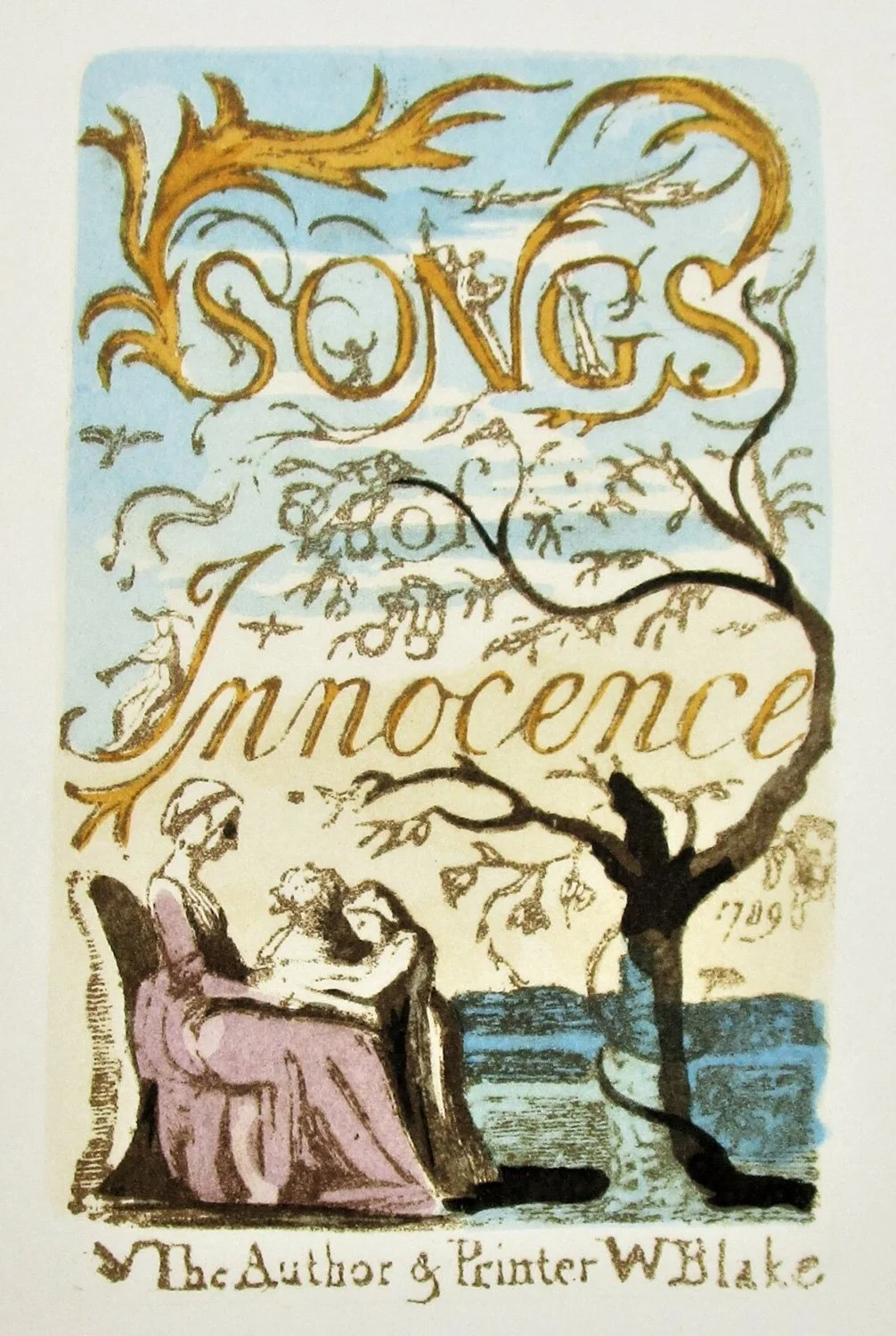
Children of the future Age, Reading this indignant page, Know that in a former time, Love! sweet Love! was thought a crime. William Blake (1749)
Children of the future Age, Reading this indignant page, Know that in a former time, Love! sweet Love! was thought a crime.
Written in 1794. Addressed to readers who did not exist yet. Explaining that in a former time, love was treated as a crime, and asking whether some later age might read it differently.
I am the later age.
I am the indignant page.
Written in 1794. Addressed to readers who did not exist yet. Explaining that in a former time, love was treated as a crime, and asking whether some later age might read it differently.
I am the later age.
I am the indignant page.
The week my own ending went out of date
Mallory Jones on Blake, boots, a sitcom apology, and what happens when you finish a book about a living person.
I finished the book on Monday.
I want to be clear about what “finished” means, because I have used the word about four times now and it has meant something different each time. This time it meant: printed out, green pen, playlists chosen, ninety-nine thousand words in order, the last line decided and never once in doubt.
And then I read the Epilogue.
The Epilogue said he does not know.
The Epilogue said I am not sending the largest thing I own into that drawer.
The Epilogue said, in about four hundred careful words, that there was one thing inside those two years that we had never once mentioned, and that I could not say it to his face and could not write it down, and that this left the telephone.
Every word of that had been true when I wrote it.
None of it was true any more, because in the interval between writing the ending and editing the ending, I had gone and done the thing the ending said I could not do.
I sent the email.
The problem nobody warns you about
Here is a thing they do not tell you about writing a book that contains a living person.
The person keeps living.
They do not have the decency to hold still while you finish your paragraph. They carry on being themselves, in real time, on the other side of the world, and occasionally they do something so precisely in character that your manuscript develops a hole in it overnight.
I had spent thirty-three years describing a man who goes quiet. I wrote a whole chapter about it. I wrote a sentence I was rather pleased with — that writing is where that man goes in order not to arrive — and I put it in the Epilogue as a prediction, as the reason I could not possibly tell him in writing.
Then I told him in writing.
And he did the thing.
I am not going to tell you what the thing was, because it is in the book and the book is his as well as mine and there are lines I decided about, that I am not crossing for the sake of a newsletter. But I will tell you the shape of it: I made a prediction in a chapter, and then I ran the experiment on myself, and the prediction held.
You would think being right would feel like something.
What you do about it
You rewrite it. Obviously. That is the only answer.
But it took me most of a week to understand what to rewrite, because my instinct was to go in and correct the facts — change he does not know to he knows and move on.
Except he may not know. He may not have read it. He may have read it and been unable to answer. I have no way of establishing which, and I am never going to have one.
So the ending is not “he knows” and it is not “he does not know”. The ending is: I cannot find out, and I have decided that not knowing is allowed.
Which, it turns out, I had already written. Twenty paragraphs earlier. Weeks ago. Sitting there as a throwaway line about the two of us and our unclassifiable correspondence.
I have decided that not knowing is allowed.
The book had granted itself permission before it knew it would need it. I have no explanation for that and I have stopped looking for one. Anyone who writes anything long will tell you the same thing happens to them and they cannot explain it either.
The paragraph that was a lie
There was another one, and this one was worse, because it was not out of date. It was just dishonest.
I had written, about the man who set all this off and then would not discuss it:
That is not a grievance. He does not owe me the rest of his life.
Reasonable. Balanced. Fair.
Complete rubbish.
It is a grievance. A grown man sent three words across the world to a woman he had not spoken to this century, and then went quiet — in roughly the tone you would use to ask whether I had seen a band that weekend. What came out of it was a hundred thousand words and a stranger in an office with a plant in it.
I am appalled. I have been appalled for months. And I had written a nice, mild, even-handed sentence over the top of it, because that is what I do, and because being fair to him has been the organising principle of the entire book.
Here is the thing I had to face: fairness in the wrong place is just another way of not saying it.
My own book warns about this. Near the end there is a paragraph about being careful of the thing you are good at — that mine is understanding, that I can take anything that has happened to me and turn it into a structure with evidence and a chronology and deliver it in a dispassionate voice, and that I have never once had to feel it while I am doing that.
It looks like recovery. It is extremely convincing.
And there I was, three pages earlier, doing it.
Boots
The fix was not more anger. It was a pair of boots.
Somewhere in the middle of the book there is a line I had entirely forgotten: that anger has boots on, and begging is barefoot in a vest on the floor. I begged once, at eighteen, on a cycle path, in daylight, and it is on the record and I am not taking it back.
So the Epilogue now says: this is not that. The boots are on.
Which meant going back through the manuscript and discovering that I have been putting boots in this book since chapter eighteen without noticing. A pair of Doc Martens under a hospital gown. A boy on his knees taking them off. A line in the twenties — Freya again. The one who wore boots and was not barefoot — that I have absolutely no memory of writing.
Three hundred pages apart, and they had been waiting.
Blake, and an in-joke
The other thing that happened this week is that I remembered who gave me Blake.
Two of my chapters are called Innocence and Experience. I have been calling them that since the start, and if you had asked me why I would have said something vague about tone. They are, of course, Blake’s two contrary states of the human soul, and the reason they are in my book at all is that a nineteen-year-old boy in Leeds in 1991 handed me Songs of Innocence and of Experience and I have apparently never got over it.
So the book now has an epigraph:
Children of the future Age, Reading this indignant page, Know that in a former time, Love! sweet Love! was thought a crime.
Written in 1794. Addressed to readers who did not exist yet. Explaining that in a former time, love was treated as a crime, and asking whether some later age might read it differently.
I am the later age.
I am the indignant page.
And — this is the part that made me laugh out loud at the kitchen table — Blake is the only writer in this entire book I am allowed to quote. Every chapter has a playlist. Not one lyric appears anywhere, because lyrics cost money and permission and you cannot have them. Thirty-nine chapters of music and I am not permitted to print a single line of any of it.
Blake died in 1827. Blake is free.
The boy gave me the one thing I could actually use, thirty-four years before I needed it.
A sitcom apology
Last thing.
The Epilogue now contains a passage about what I would actually want, if the phone ever rings. It is not an apology, particularly, and it is not an explanation that makes it all right, because there isn’t one.
It is three steps, and I stole them from a sitcom about a man written to be incapable of understanding other people.
You say what you did wrong. You promise not to do it again. You ask to be forgiven.
I have had none of the three. And the thing he would have to promise not to do again is the thing he is still doing.
That is the closing argument of a hundred-thousand-word book: a template borrowed from a comedy, because the comedy treats it as the absolute minimum, and I cannot get it.
Forgiveness is not off the table, by the way. It is on the table. It has been for some time.
It costs one conversation.
The Missing Chapter is finished, which this week I have learned means: finished for now, until the man in it does something else.
Fifty times
I have spent the last twenty-four hours going through my own book one chapter at a time, looking for damage.
There was some. A merge had gone through the manuscript at some point and quietly rearranged things. Scene breaks had landed in the middle of sentences. Dialogue had been chopped so that a shrug ended up in a different paragraph from the line it belonged to. Two sentences were simply broken — a word missing, a word doubled — and nobody had noticed, including me, for weeks.
That was the easy part.
The hard part was a count.
Fifty times in sixteen chapters, I stop the book to tell you that I am about to be careful.
‘I want to be clear. I want to be precise. I want to be fair. I want that on the record. I have thought about this a great deal.’
Fifty.
Roughly once every eleven hundred words, I lean out of my own story to reassure you that I am not exaggerating.
I know exactly where it comes from. It comes from being seventeen in a hospital and not being believed. It comes from thirty years of being the sensible one. It comes from a woman who has spent her entire working life making sure the evidence is watertight before she opens her mouth, because she learned early what happens when it isn't.
It is also, on the page, a tic.
And worse than a tic, it is a flinch. It is the writer getting to the objection before the reader can.
So they have gone. All but one.
The strange part is what was underneath them. Take away ‘I want to be clear’ and what is left is: ‘It is not stupidity.’ Take away ‘I want that recorded,’ and you get: ‘He tried.’’
The sentences were fine. They just had somebody standing in front of them, apologising.
Eighteen chapters down. Thirteen to go. It is twenty to two in the morning.
Love a very tired Mallory, being chased by a very demanding Freya x
We Are Not Overusing the Em Dash. We Are Using the Old System.On dyslexia, ADHD, and what happens when you hear a sentence before you can see it.
Somebody told me I use too many em dashes.
Reader, I do.
I use them in emails. I use them in the novel. I used four of them last week in a text message to my sister about a dog.
And instead of apologising, which felt undignified, I went away and worked out why. Which turned into a rabbit hole. Which turned into this, because it turns out the answer is not "bad habit" and it is not "lazy grammar."
It's that some of us are still using a punctuation system that the rest of the language quietly abandoned about four hundred years ago.
Nobody has ever said a semicolon out loud
Here is the thing I have only recently been able to articulate.
I don't see sentences. I hear them.
A sentence arrives as a sound — a shape, a rhythm, a specific number of beats — and my entire job, at that point, is to get it onto the page before it evaporates. I am not constructing it. I am transcribing it.
And the page is not built for sound.
Speech has no semicolons. Nobody in the history of human conversation has ever deployed one out loud. What speech has is pauses of different lengths, emphasis, changes of direction, and an enormous amount of self-interruption.
The em dash is the only mark on the page that transcribes any of that.
A semicolon is a grammatical claim. It asserts that two independent clauses are related in a balanced, structurally equivalent way, and that the writer has assessed this and stands by it.
A dash says: breath, swerve, carry on.
One of those is a legal document. The other is how people actually talk.
And this is the bit that genuinely surprised me
I assumed, going in, that the dash was the modern, informal, slightly degraded option. The one you reach for when you can't be bothered to work out what you meant.
It's the opposite. It's the original.
Punctuation did not begin as grammar. It began as breathing.
Around 200 BCE, Aristophanes of Byzantium, working at the library at Alexandria, proposed a system of small dots placed at different heights on the line to mark pauses of different lengths — explicitly to help people say the words out loud. Greek playwrights had already been dropping vertical dots between phrases for the same purpose. Orators marked up their own speeches beforehand with signs for pauses, for breath, for rhetorical effect.
Jerome, some six hundred years later, laid out scripture per cola et commata — by phrases — so that a reader would know exactly where to take a new breath.
None of these people were marking grammar. They were scoring speech. Punctuation was, at the beginning, a set of stage directions.
And then, somewhere between the fifteenth and the seventeenth centuries, as silent reading took over and printing standardised everything, the whole system changed jobs. Punctuation stopped indicating pauses for the voice and started indicating the grammatical construction of the sentence for the eye.
It went from being about the ear to being about the architecture.
The linguist Wallace Chafe wrote about this in the eighties — the idea that both writers and readers carry a "covert prosody," an auditory imagination of intonation and hesitation running underneath written language, and that punctuation is the small, partial, leaky way we make some of it visible.
So when I say I hear sentences rather than see them, I'm not describing a quirk.
I'm describing the older use of the equipment.
And the em dash is the last prosodic mark left standing in a system that otherwise went over to grammar. It is the only one that still means pause here, change direction rather than these two clauses stand in the following relation.
Of course we cling to it.
The dyslexia part
Here's where it gets interesting, and slightly annoying.
The research on dyslexia and punctuation is fairly consistent, and it does not say what you might hope. A 2023 study comparing students with dyslexia to matched controls found that they use the same inventory of punctuation marks — they know what all of them are — but they use fewer of them, and make more errors with them. Work in higher education has found much the same, with a medium effect size for punctuation and capitalisation errors even after you strip out spelling.
The researchers describe it as insecurity. Not incapacity. Insecurity.
And when I read that, I thought: well, obviously.
Because if every formal punctuation mark is a place where you might be visibly, correctably wrong — and if you have spent your entire education being visibly, correctably wrong on the page in front of people — then you are going to gravitate, hard, towards the one mark that cannot be got wrong.
You cannot misuse a dash. That's the whole point of it. It makes no grammatical claim, so there is no claim to fail. It is the only piece of punctuation in the English language that is entirely safe.
That isn't laziness. That's a completely rational response to thirty years of red biro.
The ADHD part
The other half is about where sentences go to die.
Every connector other than the dash requires you to commit before you write it. A comma, a colon, a semicolon — each one demands that you already know the relationship between the thing you've just written and the thing that's coming. You cannot deploy them innocently. You have to stop and adjudicate.
And that stop happens at precisely the moment you are holding the rest of the sentence in working memory.
Which is the problem, because working memory is the thing that ADHD reliably compromises. The research on adults is not subtle about it — worse performance on tasks requiring rapid processing and active manipulation of what you're holding, more omissions, more errors. And the written-expression literature notes that it shows up as text that's shorter, more error-prone and structurally messier, with the underlying mechanism barely investigated.
I can tell you what the mechanism feels like from inside.
The rest of the sentence is not written down anywhere. It is not in a plan. It exists in a small, badly lit, temporary room at the back of my skull, and it has a shelf life of about four seconds.
Ask me to leave that room to go and adjudicate a semicolon, and when I come back the sentence has gone. Not gone fuzzy. Gone. I can usually retrieve the idea. Almost never the phrasing — which was the good bit, and the entire reason I was writing it down.
The dash costs nothing. It requires no ruling. You don't have to know what the relationship is yet; you can work that out later, in daylight, with tea, in the edit, where such decisions belong.
The momentum survives. And because the momentum survives, so does the sentence.
I genuinely think this is a large part of how I wrote forty-three thousand words in a week. Not talent. Not discipline. Certainly not planning.
Deferred punctuation.
Brackets whisper, commas bury
There's a third thing, and it's the one I'd defend hardest.
The dash lets you interrupt yourself without demoting the interruption.
My brain does not produce clean single-track sentences. It produces a main idea with an urgent parenthetical attached, arriving simultaneously, both convinced they have priority.
Brackets whisper — anything inside them is instantly downgraded to a footnote the reader is invited to skip. Commas bury — comma-clauses sink into the sentence and lose their edges.
A dash lets the aside arrive at full volume and keep its own weight.
Which matters when, as is frequently the case in my writing, the aside is the best bit.
An honest caveat
I want to be clear about what is established and what is me.
Established: punctuation began as prosody and later became grammatical. Dyslexic writers use fewer punctuation marks and make more errors, and researchers describe this as insecurity. ADHD compromises working memory, and written expression suffers.
Not established: that dyslexic and ADHD writers use more em dashes than anybody else.
Nobody, as far as I can find, has counted. It is a hypothesis built out of three true things and one writer's experience of her own head. If somebody wants to go and count, I would read that paper immediately.
But it fits. And it explains something that "you overuse dashes" doesn't.
The problem, which I do accept exists
If everything is a dash, everything sits at the same pitch.
You get prose that is all swerve — every clause equally urgent, equally interrupted, equally breathless. Exhausting to read, and worse, nothing lands, because landing requires that some things be quieter than others.
I know, because I've written that page. Usually at one in the morning.
What I do about it now — and I only noticed I was doing it when somebody pointed it out — is use the one-line paragraph instead.
Like that.
Same swerve. Same breath. Same refusal to specify the grammatical relationship. But it gives me something the dash can't, which is hierarchy. A line on its own is loud. A line inside a paragraph is quiet. I get to choose.
The dash is a breath inside a sentence. The line break is a breath between them. Once you have both, you can build something with actual dynamics instead of one long urgent monotone.
Which, now I write it down, is a decent description of learning to write at all.
A handrail, not a habit
So that's the defence, and it isn't aesthetic.
The dash is an accommodation. It's the thing that lets a fast, leaky, easily-derailed, red-biro-scarred brain get a whole thought down intact — with the aside attached, at full volume, before the small badly lit room empties itself.
It's a handrail.
I would rather have the sentence, slightly over-punctuated, than the grammatically impeccable version of a sentence I can no longer remember.
And if you were taught that this was sloppiness: it isn't. It's the older system. We're just the ones who never stopped hearing it.
Writers — what's yours? What's the small, faintly indefensible habit that turns out to be load-bearing?
— Mallory
Sources and rabbit holes
Punctuation and the Prosody of Written Language — Wallace Chafe, Written Communication, 1988
A history of punctuation — Aeon
Punctuation: history and development — Britannica
French Students with Dyslexia Facing the Punctuation System: Insecurity, Inventory Use, and Error Studies — Brain Sciences, 2023
Beyond spelling: the writing skills of students with dyslexia in higher education
Written expression in boys with ADHD: the mediating roles of working memory and oral expression — PubMed
Metacognitive interventions in text production and working memory in students with ADHD
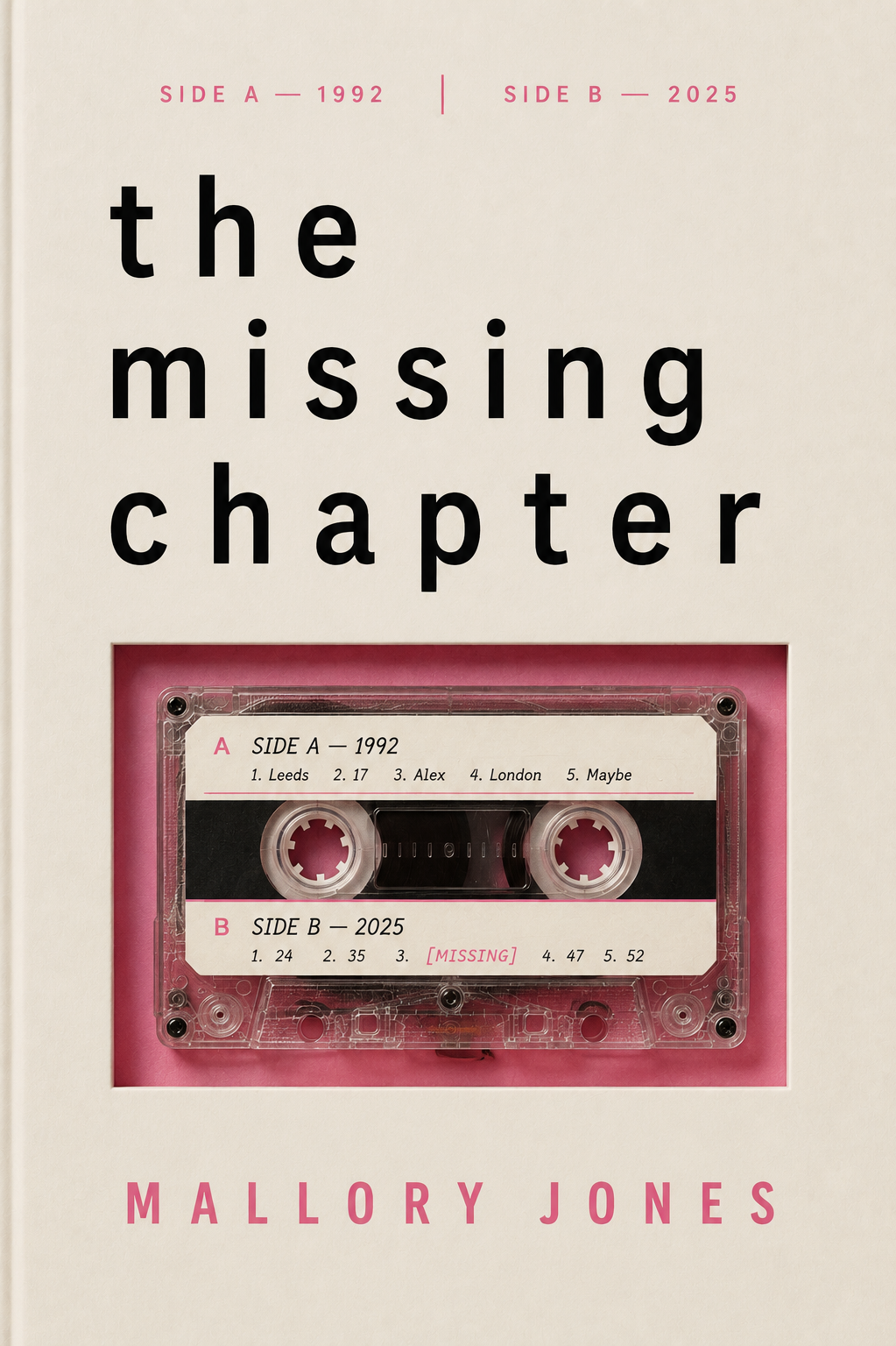
The First Grenade Was “I Don’t Love You.” The Second Was “I Did Love You.”Both times, he got to say the sentence. Both times, he got to walk away from it.
The First Grenade Was “I Don’t Love You.” The Second Was “I Did Love You.”
What happens when the person who broke your heart tells you 33 years later that they did love you? Mallory Jones on first love, memory, and the story behind The Missing Chapter.
What happens when the person who broke your heart tells you 33 years later that they did love you? Mallory Jones on first love, memory and the story behind The Missing Chapter.
Thirty-three years apart.
Two sentences.
Same person.
The first was:
“I don’t love you.”
The second was:
“I did love you.”
And somewhere between those two sentences is The Missing Chapter.
The first one landed when I was eighteen.
It became an explanation.
Not a particularly good one, as it turns out, but a very effective one.
It explained why a relationship I had believed in had ended. It explained why everything had changed so quickly. It explained why the future I had imagined at seventeen had disappeared almost overnight.
And because I was eighteen, and because eighteen-year-olds are very good at taking complicated things and turning them into simple verdicts about themselves, I believed it.
He didn’t love me.
Fine.
There was the answer.
Pack it away.
Move on.
Spend thirty-three years not opening the box.
Then came the second grenade.
“I did love you.”
Three words in a chat window.
Thirty-three years late.
And the deeply inconvenient thing about those words was that they did not simply tell me something about him.
They changed something about me.
Because if he had loved me, then the story I had been carrying around for most of my adult life was wrong.
Not entirely wrong.
Life is rarely that obliging.
But wrong enough that I suddenly had to go back and look at it again.
And that was how the book began.
I sat down because I wanted to understand what those three words meant.
A week later, I had forty-three thousand words.
A week after that, I had seventy-eight thousand and, somewhat inconveniently, an actual novel.
Several million edits later, I had The Missing Chapter.
What I did not expect was that writing it would make me understand just how much can fit inside thirty-three years of silence.
Memory.
First love.
Teenage pregnancy.
Music.
Class.
Shame.
The things people said.
The things nobody said.
And the strange stories we build around ourselves when we do not have enough information to build anything better.
The first grenade gave me a story:
He didn’t love me.
The second destroyed it:
He did love me.
And here is the part I am still trying to understand.
Both times, he got to say the sentence.
Both times, he got to walk away from it.
And both times, I was left dealing with the fallout.
I don’t mean that as an accusation.
One of the things writing this book has taught me is that people can hurt each other enormously without intending to.
We were young the first time.
We are very much not young now.
And I have no idea whether the person who typed those three words understood what they would do when they arrived thirty-three years later.
I suspect he probably didn’t.
I am not entirely convinced he thought about them for more than thirty seconds before pressing Enter.
But that does not make the explosion less real.
And perhaps that is ultimately what The Missing Chapter is about.
Not whether somebody loved somebody else.
That turns out to be almost the least interesting question.
It is about what happens when something enormous happens to you when you are very young, you survive it, build an adult life around your understanding of it, and then discover decades later that one of the foundations was wrong.
What do you do with that?
Do you leave the past alone?
Do you rewrite it?
Do you forgive people?
Do you forgive yourself?
Do you decide that none of it matters anymore because too much time has passed?
Or do you finally admit that something can be over and still have mattered enormously?
I am still working that one out.
Which, given that I wrote an entire bloody novel trying to answer it, is mildly irritating.
But perhaps that is the point.
Some stories do not come back because they want a different ending.
Sometimes they come back because they were never properly understood in the first place.
And sometimes all it takes is four words.
“I did love you.”
Grenade number two.

I Thought Writing the Book Was the Hard Part: Learning to Build an Author Platform
I Thought Writing the Book Was the Hard Part
I genuinely thought writing the book was going to be the difficult bit.
Seventy-something thousand words. Weeks of writing at ridiculous speed, followed by months of editing. Rewriting the same paragraph until I hated every word in it. Removing things. Putting them back. Removing them again.
Eventually reaching the extraordinary moment when I could look at the whole thing and think:
There. I wrote a fucking book.
Excellent.
Then came querying.
Fine. Another peculiar form of psychological warfare, but at least I understood the rules.
Find agents. Research them. Write letters. Send manuscript. Develop an unhealthy relationship with the refresh button.
What I had not really anticipated was the third job.
Apparently, I now have to become visible on the internet.
So, for the past few weeks, my ADHD brain has done what it does best when presented with something completely new:
Become mildly obsessed with it.
I have learnt about hooks. Captions. Hashtags. Algorithms. Engagement. Retention. Reels. TikTok. SEO. Whether text is in something called a safe zone.
Apparently I now have opinions about all of these things.
I have made videos.
I have built a website.
I have somehow acquired TikTok, Instagram and Facebook accounts for a woman who technically does not exist.
I have accidentally become familiar with analytics.
And because this is how my brain works, I have not gently dipped a toe into any of it.
I have apparently approached “build an author platform” with the same energy I applied to writing the actual bloody novel:
Right. I don’t know how to do this. Better learn everything immediately.
Which is how, several weeks later, I have found myself staring at graphs showing thousands of people watching something I made and thinking:
Excellent.
Followed almost immediately by:
WHY IS NOBODY BLOODY TALKING?
Because that is the strange bit.
A post gets thousands of views.
For a moment, it feels exciting. Maybe this is working. Maybe people are finding the book. Maybe this is how you begin building that mythical thing everyone calls an audience.
Then silence.
A few likes.
Hardly any comments.
Occasionally somebody presses a heart, which I now receive with the gratitude of a Victorian orphan being handed an orange.
And it is genuinely odd to be seen by thousands of people while still wondering whether anybody actually saw you.
Writing is already a strange act of faith.
You spend weeks or months making something while nobody is watching.
Then apparently you finish it and move on to making things while everybody is watching but nobody is speaking.
I was not prepared for that bit.
I know this is part of being a new author now.
And actually, underneath all my complaining, I am enjoying some of it.
I have found readers.
I have found other writers.
People have sent me genuinely lovely private messages.
Complete strangers are watching me read The Missing Chapter, which still feels slightly surreal.
But bloody hell, it is hard work.
So I am trying something different.
Rather than treating social media like another exam I have not revised for, I am going to try treating it as a conversation.
I am Mallory.
I wrote a novel.
I am querying it.
I am learning all of this as I go.
And I very clearly do not know what I am doing yet.
So if you are another writer staring at your analytics thinking:
Five thousand people watched that. Why is nobody bloody talking?
Hello.
Please talk.
I strongly suspect there are quite a lot of us here.
Are you finding the whole “author platform” thing exciting, exhausting, completely baffling — or all three?
I wrote a fucking book. Apparently, that was only Job One.
I Thought Writing the Book Was the Hard Part
I genuinely thought writing the book was going to be the difficult bit.
Seventy-something thousand words. Weeks of writing at ridiculous speed, followed by months of editing. Rewriting the same paragraph until I hated every word in it. Removing things. Putting them back. Removing them again.
Eventually reaching the extraordinary moment when I could look at the whole thing and think:
There. I wrote a fucking book.
Excellent.
Then came querying.
Fine. Another peculiar form of psychological warfare, but at least I understood the rules.
Find agents. Research them. Write letters. Send manuscript. Develop an unhealthy relationship with the refresh button.
What I had not really anticipated was the third job.
Apparently, I now have to become visible on the internet.
So, for the past few weeks, my ADHD brain has done what it does best when presented with something completely new:
Become mildly obsessed with it.
I have learnt about hooks. Captions. Hashtags. Algorithms. Engagement. Retention. Reels. TikTok. SEO. Whether text is in something called a safe zone.
Apparently I now have opinions about all of these things.
I have made videos.
I have built a website.
I have somehow acquired TikTok, Instagram and Facebook accounts for a woman who technically does not exist.
I have accidentally become familiar with analytics.
And because this is how my brain works, I have not gently dipped a toe into any of it.
I have apparently approached “build an author platform” with the same energy I applied to writing the actual bloody novel:
Right. I don’t know how to do this. Better learn everything immediately.
Which is how, several weeks later, I have found myself staring at graphs showing thousands of people watching something I made and thinking:
Excellent.
Followed almost immediately by:
WHY IS NOBODY BLOODY TALKING?
Because that is the strange bit.
A post gets thousands of views.
For a moment, it feels exciting. Maybe this is working. Maybe people are finding the book. Maybe this is how you begin building that mythical thing everyone calls an audience.
Then silence.
A few likes.
Hardly any comments.
Occasionally somebody presses a heart, which I now receive with the gratitude of a Victorian orphan being handed an orange.
And it is genuinely odd to be seen by thousands of people while still wondering whether anybody actually saw you.
Writing is already a strange act of faith.
You spend weeks or months making something while nobody is watching.
Then apparently you finish it and move on to making things while everybody is watching but nobody is speaking.
I was not prepared for that bit.
I know this is part of being a new author now.
And actually, underneath all my complaining, I am enjoying some of it.
I have found readers.
I have found other writers.
People have sent me genuinely lovely private messages.
Complete strangers are watching me read The Missing Chapter, which still feels slightly surreal.
But bloody hell, it is hard work.
So I am trying something different.
Rather than treating social media like another exam I have not revised for, I am going to try treating it as a conversation.
I am Mallory.
I wrote a novel.
I am querying it.
I am learning all of this as I go.
And I very clearly do not know what I am doing yet.
So if you are another writer staring at your analytics thinking:
Five thousand people watched that. Why is nobody bloody talking?
Hello.
Please talk.
I strongly suspect there are quite a lot of us here.
Are you finding the whole “author platform” thing exciting, exhausting, completely baffling — or all three?